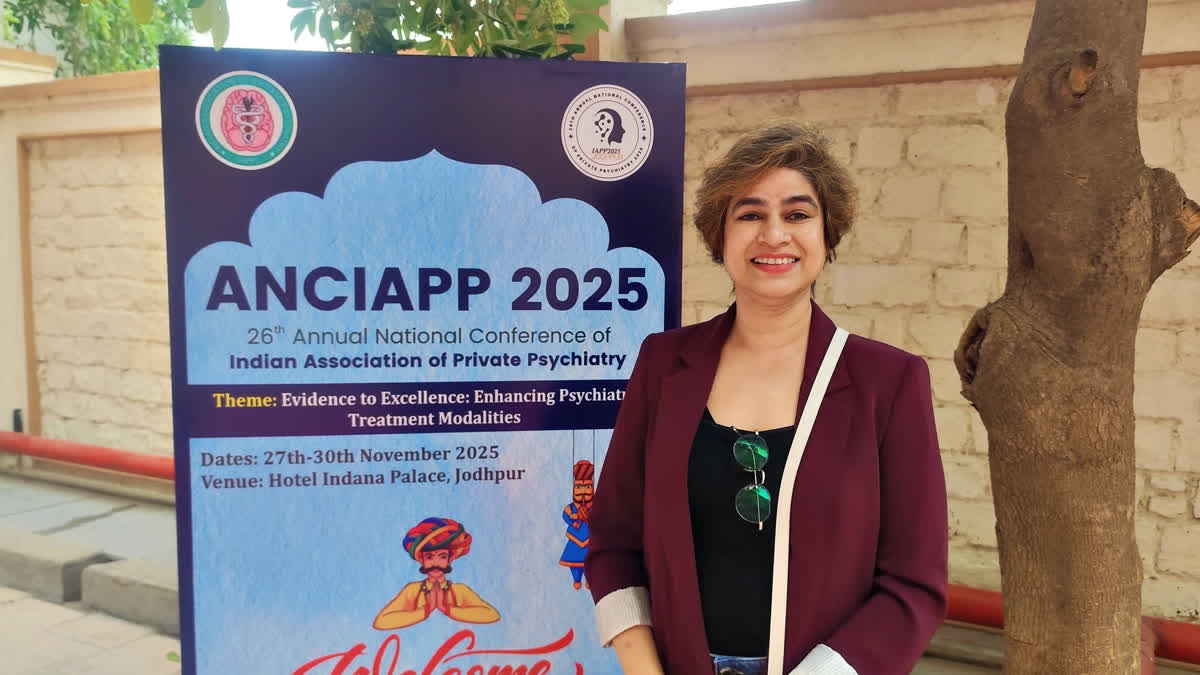
Clinical psychologist Dr Lavanya Patel (ETV Bharat)
Jodhpur: Loneliness is becoming one of the most serious issues affecting children’s mental health, according to clinical psychologist Dr Lavanya Patel.
Speaking at an Annual National Conference of the Indian Association of Private Psychology (ANCIAPP 2025) in Jodhpur on Saturday, Dr Patel said that children living in nuclear families are increasingly facing stress, emotional isolation and depression, which can push them towards risky or harmful behaviour.
In conversation with ETV Bharat, Dr Patel explained that loneliness is affecting young minds so deeply that many children are unable to think clearly or express their feelings. She said that every day, new cases emerge where children withdraw into themselves, avoid conversations and slowly lose interest in activities they once enjoyed. This emotional silence, she warned, can affect their personality development and overall growth.
Clinical Psychologist Explains How Loneliness Is Emerging As Major Mental Health Challenge Among Children (ETV Bharat)
Children Need Companionship Between Ages 7 And 14
According to Dr Patel, the age group of 7 to 14 years is the most critical for emotional bonding and companionship. However, the structure of modern nuclear families often makes this difficult. With both parents working, many children spend long hours alone or with domestic help. Over time, this lack of meaningful interaction leaves them vulnerable to loneliness.
Dr Patel explained that children begin to show behavioural changes during this period. They may become irritable, overly quiet or unusually attached to phones and screens. Since they lack a supportive adult to talk to, they struggle to handle everyday stress or emotional challenges on their own.
Judgment Based On Academics Increases Pressure
Dr Patel said that another major contributor to stress is the constant comparison children face regarding academic performance. Dr Patel noted that parents often judge their child solely on marks or grades, which is unfair because every child has different strengths. Some children excel in sports, music, dance or creative fields, yet schools and families frequently measure success through only one lens, which is academics.
She said, “This narrow judgment creates unconscious pressure. When a child feels they are being evaluated by everyone, they develop a fear of judgment. This fear pushes them into further stress, making them less confident.” Dr Patel emphasised that parents must understand that not every child can top their class, but every child has something that needs recognition.
Mobile Phones As An Escape
To deal with this increasing pressure, many children turn to mobile phones. Dr Patel described mobile phones as devices without a “stop button.” Children are not guided on what to watch, how much to watch or when to stop. Without limits, they fall into excessive screen time, which becomes an unhealthy coping mechanism.
She also warned that some lonely children begin seeking companionship from older children who may be on the wrong path. Because these older groups often welcome them warmly, children feel accepted and fail to notice the negative influence. Sometimes, they receive praise or attention that feels good in the moment, but leads them towards harmful decisions later.
Importance Of Elders In The Household
Dr Patel strongly suggested that families should ensure that an elder or supportive adult is present at home until the child reaches adolescence. She said that in joint families, children naturally grew up with grandparents, uncles or aunts who could guide them, listen to their concerns and teach them right from wrong. “Today, with both parents working and children spending time alone or with maids, this emotional foundation is missing,” she added.
She also said that if living with in-laws slightly affects a couple’s privacy, it is still worth considering, because the emotional security children receive from elders is far more important.
The Three A’s Every Child Needs
To help children develop confidence and emotional stability. Dr Patel highlighted three key elements known as the Three A’s:
- Acceptance: “Accept me for who I am.”
- Acknowledgement: Recognising the good actions or efforts of the child.
- Appreciation: Praising even small achievements.
She explained that when children feel accepted and appreciated at home, they value themselves more. This self-confidence helps them understand what is right and wrong, even before their logical thinking fully develops.
Right And Wrong Must Be Taught Early
Dr Patel said that the prefrontal cortex, the brain area responsible for logic and decision-making, develops completely only between the ages of 22 and 25. Until then, children and teenagers make decisions based largely on emotions. Therefore, parents must guide them gently during their teenage years through consistent teaching, communication and the Three A’s.
Rise in Post-COVID Depression Cases
According to Dr Patel, cases of loneliness and depression have increased significantly after the COVID-19 pandemic. She said that most young clients today struggle with isolation and lack of emotional support. Her key advice for families is to ensure children have the presence of caring elders or adults around them, so that they grow up with emotional strength, security and healthy decision-making abilities.
Also Read
- Your Coffee Addiction Might Actually Be Doing Something Useful, Find Out How Many Cups Are Ideal Every Day (And How Much Is Too Much)
- How Video Games Mess With (And Mend) Young Minds, According To A Child Psychiatrist
- How Arts, Music, And Movement Improve Neurodiverse Children’s Learning
link