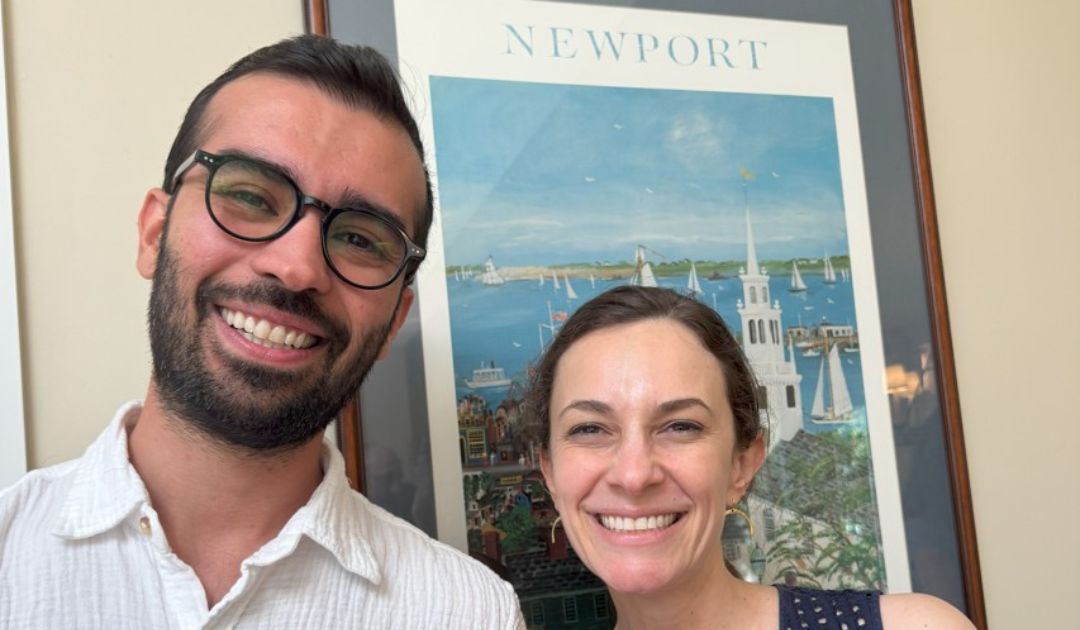
Fellow clinical psychologists Anna Nicholaides and Hider Shaaban of Glenside met each other for the first time in February by pure coincidence.
Nicholaides, the owner of Philadelphia Couples Therapy, found Shaaban after sending networking emails to a dozen group practice owners in Center City. As it turned out, one of them was living just a few doors away.
“I was never expecting anyone in the field to live two blocks away from me,” she said. “Hider replied that day and mentioned that he lives in Keswick Village, which is exactly where my family lives. It’s been a lovely encounter. We thought it was so interesting that similar practitioners reside right here in Glenside.”
The families had brunch at the Shaabans a few weeks ago, and plan to get together this Saturday for brunch at the Nicholaides’ house.
“It all started with a cold email,” Shaaban said.
A specialist in trauma and anxiety disorders and a graduate of La Salle University, Shaaban says his foray into the field was “pretty circuitous” and began after reading the best-selling book “How to Win Friends and Influence People” by Dale Carnegie.
“I was initially drawn to dentistry, but I was influenced by Carnegie’s book, particularly its discussion of how human relationships work,” he said. “That spiked my interest in psychology.”
His Philadelphia-based practice, Philadelphia Center for Psychotherapy, began in 2022 when demand for remote therapy was at an all-time high.
“We were all sort of reeling from the pandemic’s adjustments and figuring out how to provide therapy remotely,” he said, noting that his practice now has a staff of 16 full-time employees and is in network with most insurance companies. “I started thinking about hiring other people and slowly started to build on that.”
“Depression, OCD, grief and loss are all things we work with, all of which can fall under the umbrella of trauma and anxiety disorders,” he said. “I really want to maintain the smaller practice atmosphere. I think people are drawn to us because of the culture we try to preserve. It’s easy to just go into your office, see your clients, and clock out at the end of the day without many other social interactions. That’s why we’re a smaller-scale practice so that people feel like they’re part of a group.”
According to Shaaban, his office averages roughly 80 patients a day.
“Most of our clients are still virtual. We have patients who want to do in-person, and that segment is growing. Some meet us in-person for their first visit and go virtual for the others,” he said.
Philadelphia Center for Psychotherapy’s multidisciplinary team includes a variety of licenses, each with their own niche, he said.
“We are all psychotherapists, but there are different routes people can take to get there. We also have trainees that we work with full-time as they get their licenses,” he said. “The way we frame the work we do is more long-term psychotherapy. We position the practice to help people feel better and reduce symptoms, but we’re invested in where those symptoms are coming from in the first place. All of that takes some time. We try to find the root causes that manifest on the surface level.”
Nicholaides noted that while their practices have a considerable degree of overlap, there are also some differences.
“At Philadelphia Couples Therapy, we treat all manners of relationship issues. Because we’re clinical psychologists, we can treat severe mental illness as well. Those kinds of things can really influence romantic relationships,” she said. “Hider and I also have very similar orientations with regards to our approach. We don’t overly focus on the symptoms because that doesn’t address the root cause.”
Philadelphia Couples Therapy also offers couples’ personality assessments which “are more or less six month’s worth of couples’ therapy,” Nicholaides said. “The assessments can either jumpstart treatment, or It helps people get unstuck in their therapy. It can catapult people more quickly through their treatment process.”
Nicholaides said her path into the field was influenced by her own immediate family, who are also clinicians, though her choice to practice couples therapy came about after she took a course in grad school.
“Ultimately, that course is why I went into the field. After taking it, I fell head over heels in love with couples therapy,” she said. “When I saw couples privately, it was a lonely endeavor. Creating a team of couples specialists has allowed us to support one another, which ultimately helps the couple improve and eventually thrive.” she said. “We have a lot of distressed couples coming through our doors for all sorts of reasons. I’ve seen many couples get better, which is incredibly heartening.”
For more information about Philadelphia Couples Therapy (123 S Broad Street), you can visit their website at www.PhiladelphiaCouplesTherapy.com.
For more on Philadelphia Center for Psychotherapy (255 S 17th Street Suite 1900), you can visit their website at philadelphiapsychotherapy.org.
For all the latest news, follow us on Facebook or sign up for Glenside Local’s “Daily Buzz” newsletter here.
Photo courtesy of Hider Shaaban
link