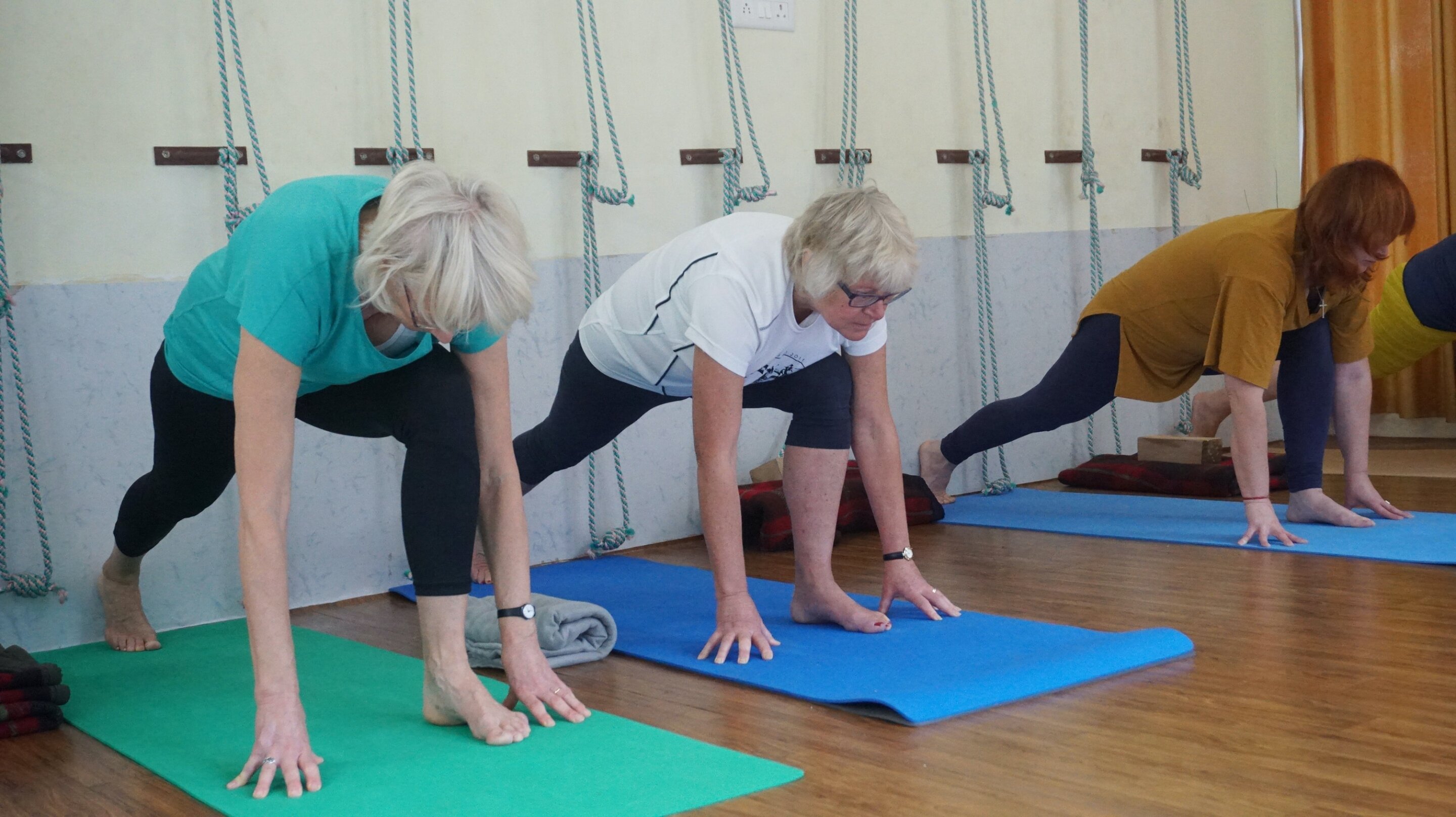
The Granada Biosanitary Research Institute (ibs.GRANADA) and the University of Granada, in collaboration with the Biomedical Research Institute of Malaga and Platform in Nanomedicine (IBIMA Plataforma BIONAND), have carried out a study that analyzes the relationship between muscle strength and mental health in cognitively healthy older adults.
The study, which is part of the randomized controlled trial ÁGUEDA—Active Gains in Brain Using Exercise During Aging—included 90cognitively healthy older adults (57% women), and offers new perspectives on how physical fitness can influence the psychological well-being of older people.
Dr. Irene Esteban-Cornejo, a researcher in TEC15-Nuclear and Molecular Medicine of the ibs.GRANADA, who also leads the ÁGUEDA project, worked with the main author of this study, Darío Bellón. They are both professionals from the Department of Physical and Sports Education of the Faculty of Sports Sciences and the Joint University Institute of Sports and Health (iMUDS) of the University of Granada (UGR).
The study, published in the International Journal of Clinical and Health Psychology, focused on assessing muscle strength through various tests, such as handgrip strength, squats, and elbow and knee extension exercises, as well as through perceived indicators such as the International Physical Fitness Scale (IFIS).
In addition, various aspects of mental health were assessed, including anxiety, depression, stress, loneliness, life satisfaction, self-esteem, and emotional well-being.
In Malaga, the postdoctoral researcher of the IBIMA BIONAND Platform Mental Health, Services and Primary Care (SAMSERAP) group, Dr. María Rodríguez-Ayllón, has participated in this work in permanent collaboration with professionals from the capital of Granada. Rodríguez states, “Our results indicate that there is a significant association between grip strength and self-esteem, as well as between perceived strength and depressive symptoms.”
In addition, she emphasizes that “the findings in this study underline the importance of maintaining good muscle strength not only for physical health, but also for mental well-being in old age.”
Bellón, who carried out this study as part of his Doctoral Thesis in the Biomedicine Program of the UGR, says, “The identification of muscle strength as a modifiable factor can open new avenues for the intervention and prevention of mental health problems in older adults, reinforcing the need to promote physical exercise programs adapted to this population.”
The AGUEDA study has developed a 6-month muscle strength intervention to examine whether improvements in muscle strength after the exercise program produce improvements in mental and cognitive health in older adults, and to identify the mechanisms of action underlying these improvements. Promising results in this direction will soon be available.
More information:
Darío Bellón et al, Associations between muscular strength and mental health in cognitively normal older adults: a cross-sectional study from the AGUEDA trial, International Journal of Clinical and Health Psychology (2024). DOI: 10.1016/j.ijchp.2024.100450
University of Granada
Citation:
Study links muscle strength and mental health in older adults (2024, October 10)
retrieved 11 October 2024
from
This document is subject to copyright. Apart from any fair dealing for the purpose of private study or research, no
part may be reproduced without the written permission. The content is provided for information purposes only.
link