Study design
The choice of research method depends on the nature of the phenomenon under investigation and the specific research questions being addressed [16]. This study aimed to evaluate the effectiveness of a psychosocial support intervention on the mental health of pregnant adolescents. To accomplish this, a mixed-methods research design was employed, integrating qualitative and quantitative approaches across three phases.
In the first phase, a qualitative method was utilized to explore the lived experiences of pregnant adolescents who received psychosocial support, providing in-depth insights into their needs and challenges. In the second phase, the Nominal Group Technique was applied to prioritize and select intervention strategies based on both qualitative findings and expert consensus. Finally, the third phase employed a quantitative method to assess the impact of the developed intervention on key mental health outcomes, including social support, depression, anxiety, and stress.
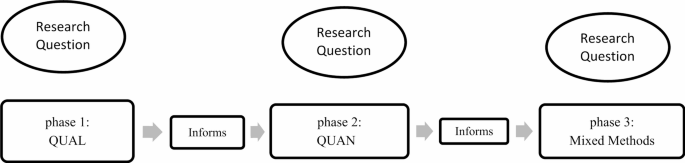
Given the complexity of the research questions and the multifaceted nature of the intervention, a mixed-methods approach was deemed the most appropriate and comprehensive strategy for this study (See Fig. 1).
Step one: qualitative phase – understanding the psychological support needs of pregnant adolescents
The first phase of the study aimed to explore and understand the psychological support needs of pregnant adolescents. Participants were initially selected through purposive sampling based on their willingness to participate and ability to communicate effectively. As the study progressed, additional stakeholders including healthcare personnel, spouses, and family members of the adolescents were also recruited to provide broader perspectives on the adolescents’ psychosocial needs.
Interviews were conducted in health centers affiliated with Ahvaz Jundishapur University of Medical Sciences. The sample size was not predetermined; instead, sampling continued until data saturation was reached, ensuring the collection of rich and comprehensive qualitative data.
Qualitative stage: data collection method, sample size and, key participants selection
The primary method for data collection in the qualitative phase was semi-structured, in-depth interviews conducted with pregnant adolescents at health centers. Prior to the interviews, the researcher obtained written informed consent, coordinated with health center administrators, and provided participants with a clear explanation of the study’s purpose and procedures.
Purposeful sampling was employed to ensure diversity across various demographic and psychosocial factors. Face-to-face interviews were conducted using open-ended questions designed to explore experiences and perceptions of psychosocial support during pregnancy. The length of each interview varied depending on the participant’s condition and the depth of the topics discussed.
Examples of guiding questions included:
-
“What types of support do you need during pregnancy?”
-
“What is your understanding and experience of psychological support from those around you during pregnancy?”
-
Exploratory follow-up questions were used to elicit deeper insights and clarify responses.
All interviews were audio-recorded with the participants’ permission, transcribed verbatim, and subjected to rigorous qualitative analysis. Ensuring the accuracy and integrity of the findings is a critical concern in qualitative research. To address this, the study adopted Lincoln and Guba’s [17] framework for evaluating trustworthiness, which includes credibility, dependability, transferability, and confirmability. In the later development of their constructivist paradigm, they also introduced authenticity as a fifth criterion to further validate the qualitative findings [18].
Entry criteria and characteristics of pregnant adolescents
Ability to understand and speak Persian
Low-risk pregnancy and singleton pregnancy
Age 13–19
Willingness to participate in research
Ability to provide rich and adequate information in the subject matter of study
Being literate
The absence of any known mental-physical illness.
Exclusion criteria
Participants were excluded from the study if they experienced any of the following:
Step two: intervention design phase
In the second phase of the study, the psychosocial support intervention was designed through a structured, multi-step process. First, the key components and dimensions of the intervention were identified by integrating insights from the qualitative findings with a comprehensive review of existing literature and resources.
Next, intervention strategies were prioritized and refined using expert input obtained through the Nominal Group Technique, ensuring alignment with the psychosocial needs of the target population. This consensus-building process helped determine the most appropriate and feasible type of intervention.
Finally, the selected components were synthesized into a final version of the intervention, which was reviewed and validated by academic experts and professionals in the field prior to implementation.
Second stage – part one: identification of intervention components
The first part of this stage focused on identifying the key components of a psychosocial support intervention tailored for pregnant adolescents. This process drew upon findings from the qualitative phase, alongside an extensive review of both national and international literature. By synthesizing these two sources experiential data and evidence-based practices we aimed to ensure that the intervention design was contextually relevant and informed by global best practices.
To enhance the comprehensiveness of the intervention, literature from Iran and other countries was examined to integrate relevant insights, recommendations, and case examples. This culminated in the development of a preliminary version of the intervention.
Guided by the PICO framework, the central research question was defined as: “What types of interventions are implemented to improve psychosocial support for pregnant adolescents?”
A systematic search was conducted across multiple English and Persian language databases including ProQuest, Google Scholar, PubMed, SID, Iran Medex, Magiran, Scopus, and Web of Science without time limitations. The retrieved studies and resources provided a foundational basis for refining and constructing the initial draft of the intervention (See Tables 1 and 2).
Second stage – part two: expert consultation and intervention prioritization using the nominal group technique
In the second part of the intervention design phase, the Nominal Group Technique (NGT) was employed to prioritize and select the most appropriate psychosocial support strategies for pregnant adolescents. This structured, consensus-driven method brought together a multidisciplinary panel of experts, including professionals from health, education, and care services, to evaluate and refine the intervention components based on the findings from the qualitative phase.
The expert meeting focused on reviewing and prioritizing the needs and strategies previously identified. NGT is a practical and systematic approach that combines both qualitative discussion and quantitative scoring to facilitate decision-making. Its purpose in this context was to help set community-based healthcare priorities with a focus on maternal mental health.
Prior to the session, all panel members were provided with an overview of the study and a summary of the extracted qualitative findings. They were then asked to independently evaluate and prioritize the proposed components based on relevance, feasibility, and cultural appropriateness.
The expert panel comprised 10 professionals, selected for their academic qualifications and substantial experience in the field of maternal and adolescent mental health. The composition of the panel was as follows:
-
2 Clinical Psychologists
-
2 Midwifery Faculty Members
-
1 Psychiatrist
-
1 Maternal Health Policymaker
-
4 Senior Midwives (with over 10 years of experience in prenatal care)
These experts contributed to the validation of the intervention content, offered guidance on cultural adaptation, and provided ongoing consultation throughout the intervention’s design and implementation phases. The diversity of professional backgrounds ensured a comprehensive evaluation of the intervention strategies from multiple perspectives [16].
Steps for conducting the nominal group technique (NGT)
The Nominal Group Technique (NGT) was conducted in a structured manner to ensure balanced participation and consensus among experts. The process included the following steps:
-
1.
Opening the session – Introducing the objectives, context, and structure of the session to all participants.
-
2.
Silent generation of ideas in writing – Each participant independently wrote down their ideas without discussion.
-
3.
Round-robin recording of ideas – Participants shared their ideas one by one, which were recorded visibly for the group.
-
4.
Serial discussion of the ideas – Each idea was discussed for clarification, allowing participants to better understand the perspectives shared.
-
5.
Voting to select the most important ideas – Participants privately ranked the ideas using a scoring system.
Discussion on the selected ideas
Although not an essential step in the formal NGT, a concluding discussion was conducted to help the group reflect on and integrate their final rankings [19]. Following the voting, priorities were ranked and presented to the group based on the established scoring criteria.
Second step – third part: compiling the final version of the intervention content
The intervention content was adjusted based on the prioritization of psychosocial support. This prioritization was derived from the results of the qualitative phase, the review of texts, and the Nominal Group discussions.
Third stage: quantitative phase – intervention trial
The third stage of the study will employ a randomized controlled clinical trial (RCT) design with two parallel groups to evaluate the effectiveness of a psychosocial support intervention compared to routine prenatal care among pregnant adolescents in Ahvaz, Iran.
A total of 84 pregnant adolescents will be recruited from health centers affiliated with Ahvaz Jundishapur University of Medical Sciences. Participants will be randomly assigned to either the intervention group, receiving psychosocial education, or the control group, receiving routine prenatal education as per existing healthcare protocols.
The intervention will be delivered through childbirth preparation classes, conducted in accordance with the national guidelines of the Iranian Ministry of Health, Treatment, and Medical Education. These classes will consist of eight sessions, each lasting two hours, and will be held between gestational weeks 20 to 37. Each session will include the following components:
-
60 min of theoretical education, covering topics related to pregnancy, childbirth, and psychosocial well-being
-
45 min of physical activity, including stretching exercises, breathing and relaxation techniques, posture correction, and massage training
-
15 min for Q&A, allowing participants to engage with the content and seek clarification.
Instructional methods may include videos, audio playback, music, posters, anatomical models (mannequins), whiteboards, and slide presentations, tailored to enhance learning and engagement [20]. This phase aims to quantitatively assess the impact of the psychosocial intervention on mental health outcomes, such as depression, anxiety, stress, and perceived social support, in comparison to routine care.
Training workshops for midwives and educators
Prior to the implementation of the intervention, three structured workshop sessions will be conducted by the researcher for midwives and educators. These workshops are designed to build the participants’ capacity to deliver adolescent-centered psychosocial support, ensuring consistency and quality in the intervention delivery.
The workshop content will cover the following key areas:
-
Foundations of Psychosocial Support – Principles and practices relevant to adolescent care
-
Adolescent Developmental Psychology – Understanding emotional, cognitive, and social changes during adolescence
-
Mental Health During Pregnancy – Identification and management of common mental health concerns in pregnant adolescents
-
Essential Life Skills Education – Tools to support the holistic development of pregnant adolescents, including communication, stress management, and problem-solving skills
The workshops will be led by the principal researcher, a Ph.D. candidate in midwifery with a Master’s degree in midwifery counseling. She has also completed university-level training in life skills education and communication skills.
All training sessions will be supervised by a senior academic advisor with a Ph.D. in counseling, who will oversee the content delivery to ensure both academic rigor and clinical relevance. This supervision will help maintain fidelity to the intervention model and reinforce best practices in psychosocial care.
Participant enrollment and intervention
Participant recruitment and consent
Eligible participants will be enrolled by the researcher based on predefined inclusion criteria. Following approval from the relevant ethics committee and research department, written informed consent will be obtained from all pregnant adolescents participating in the study.
Sampling and randomization
Participants will be recruited using an available (convenience) sampling method from selected health centers affiliated with Ahvaz Jundishapur University of Medical Sciences. A total of 84 adolescent pregnant women who meet the inclusion criteria will be selected.
To ensure unbiased group allocation, a block randomization method (block size = 6; 1:1 ratio) will be used to assign participants to either the intervention group or the control group. The random allocation sequence will be generated by an independent statistician using a random number table. Each participant will be assigned a specific code, and group allocation will be concealed in sealed, opaque, non-transparent envelopes. These envelopes, prepared in advance by individuals not involved in the intervention, will be stored securely at the health centers.
Group allocation procedure
At the time of enrollment, midwives at the health centers will open the sealed envelopes to determine each participant’s group assignment. This process ensures allocation concealment and randomization integrity throughout the trial.
Intervention delivery
The intervention will be conducted by midwives who have completed structured training workshops on adolescent-centered psychosocial support. The intervention will consist of 6 to 8 weekly sessions, each lasting 90 min, held in small groups of 5 to 7 participants.
Session content includes
-
Life skills training
-
Stress and anger management
-
Emotion regulation techniques
-
Communication enhancement
-
Coping strategies
-
Peer support and group bonding
Instructional methods
This structured approach is designed to empower pregnant adolescents with practical skills and emotional support to improve their psychosocial well-being throughout pregnancy.
Before the intervention begins, all pregnant adolescents in both the intervention and control groups will be asked to complete a series of questionnaires. These include a Demographic and Social Profile form, a Midwifery History questionnaire, the Vaux Social Support Scale, the Perceived Stress Scale, and the Depression, Anxiety. These tools have been selected to evaluate the participants’ psychological and social well-being at baseline.
Following the completion of the intervention sessions, the same set of questionnaires will be administered again, immediately after the final session, and once more four weeks later, to assess changes over time. The researcher will be responsible for distributing and collecting the questionnaires at each of these three time points, ensuring consistency throughout the study.
While it is not possible to blind either the researcher or the participants due to the nature of the intervention, steps will be taken to minimize bias. All data will be coded anonymously, and the questionnaire responses will be entered and analyzed by an individual who is not informed of the study’s objectives or group assignments.
To ensure the ethical integrity of the study, participants in the control group will receive a summary booklet containing the key content of the intervention sessions after data collection has been completed. Additionally, if any control group participants express interest in further support, they will be offered an individual counseling session following the intervention period.
All statistical analyses will be performed using SPSS software, version 26.0 (SPSS Inc., Chicago, IL, USA). A significance level of p < 0.05 will be used for all tests. To maintain the validity of the findings, an intention-to-treat (ITT) analysis will be applied. This approach ensures that all participants are analyzed in the groups to which they were originally assigned, regardless of whether they completed the intervention, thereby preserving the randomization process and increasing the reliability of the results.
Research community
The study population will include all adolescents referred to medical and health centers affiliated with Ahvaz University of Medical Sciences.
Research setting
The research will be conducted in medical and health centers under the affiliation of Ahvaz University of Medical Sciences.
Research sample
The study will focus on pregnant adolescents receiving care at the selected health centers affiliated with Ahvaz University of Medical Sciences.
Inclusion criteria
-
Ability to understand and speak Persian
-
Low-risk singleton pregnancy
-
Aged 13–19 years
-
Gestational age between 11 and 28 weeks
-
Willingness to participate in the research
-
Literacy
Exclusion criteria
-
High-risk pregnancy
-
Detection of fetal abnormalities
-
Experience of significant stressful events within the past three months (e.g., death of a relative, divorce)
-
Known physical or mental illness
-
Maternal use of alcohol or tobacco
Data collection method
Data from the quantitative part of the study will be collected through separate questionnaires.
Data collection method
Quantitative data will be collected using validated, self-administered questionnaires.
Data collection tools
The following validated Persian versions will be used, all of which have demonstrated strong reliability and internal consistency in prior Iranian studies:
-
Vaux Social Support Appraisal Scale (Cronbach’s α = 0.80) [21]
-
Perceived Stress Scale (PSS-14) (Cronbach’s α = 0.84) [22]
-
Spielberger Anger Expression Scale (Cronbach’s α = 0.82) [23]
-
Vandenberg (1989) Scale (Cronbach’s α = 0.70) [24]
Sample size calculation and sampling method
The primary outcome for sample size calculation is based on the effectiveness of an Early Depression Prevention Program for pregnant adolescents, as described in previous randomized controlled trials” [25]. According to these studies, 38 participants per group are required. Allowing for a 10% dropout rate, the final sample size is set at 42 per group, totaling 84 participants. The calculation was performed using MedCalc software, with a power of 90% and a significance level of 5%.
This structure ensures clarity and directly references the reliability and validation of the instruments used, as well as the rationale for sample size determination.
$$\:\text{z}\_\:(1-/2)\hspace{0.17em}=\hspace{0.17em}1.96$$
$$\:\text{z}\_\:(1-)\hspace{0.17em}=\hspace{0.17em}1.645$$
$$\:\text{S}\text{D}\_1\hspace{0.17em}=\hspace{0.17em}9.14$$
$$\:\text{S}\text{D}\_2\hspace{0.17em}=\hspace{0.17em}15.83$$
$$\mu\:\_1\hspace{0.17em}=\hspace{0.17em}73.47$$
$$\:\mu\_2\hspace{0.17em}=\hspace{0.17em}64.39$$
$$\mathbf{76}\boldsymbol=\mathbf2\frac{\mathbf{\left({1.96+1.645}\right)}^{\mathbf2}\boldsymbol+\mathbf{\left({9.14_1^2+15.83_2^2}\right)}}{\mathbf{\left({37.47-64.39}\right)^\wedge2}}$$
$$\:\mathbf{n}=2\frac{{\left({\mathbf{z}}_{1-\raisebox{1ex}{$\varvec{\upalpha\:}$}\!\left/\:\!\raisebox{-1ex}{$2$}\right.}+{\mathbf{z}}_{1-\varvec{\upbeta\:}}\right)}^{2}+{(\mathbf{S}\mathbf{D}}_{1}^{2}{+\mathbf{S}\mathbf{D}}_{2}^{2})}{({\varvec{\upmu\:}}_{1}-{\varvec{\upmu\:}}_{2})^\wedge2}$$
The initial sample size calculation determined that 38 adolescents were needed in each group, totaling 76 participants. To account for a potential 10% dropout rate, the adjusted sample size was increased to 42 adolescents per group, resulting in a total of 84 participants.
Statistical analysis methods
Statistical analysis for this study will be conducted using SPSS version 26.0, with a significance threshold set at P < 0.05. To begin, the normality of all quantitative data will be assessed using the Kolmogorov-Smirnov test. For comparisons between groups, independent t-tests will be employed for variables that are normally distributed, while the Mann-Whitney U test will be used for those that do not meet normality assumptions.
To evaluate changes within groups over time, repeated measures ANOVA will be applied to outcomes that are normally distributed. If the data violate the assumptions required for repeated measures ANOVA, such as normality or sphericity, non-parametric alternatives like the Friedman test will be used instead.
To control for potential confounding variables, Analysis of Covariance (ANCOVA) will be conducted. All statistical tests will be two-tailed, and results will be considered statistically significant at a P-value of less than 0.05.
Primary outcome
Social support
Pregnancy anxiety
Pregnancy depression
Pregnancy stress
Integration of quantitative and qualitative data
The integration of quantitative and qualitative data occurs during the analysis and interpretation phases (see Fig. 2). Data collection and analysis are conducted in two distinct stages to address different research questions.

The study begins with a qualitative approach and a literature review to explore and understand the experiences of psychosocial support among pregnant adolescents. Based on the qualitative findings, priorities are identified and an appropriate intervention is designed. Subsequently, a quantitative method is employed to evaluate the impact of the intervention on maternal outcomes.
In the final stage, the qualitative and quantitative data are combined for comprehensive analysis and interpretation. This mixed-methods integration enhances the validity and depth of the findings, providing a more complete understanding of the phenomenon and supporting the development of effective, context-specific solutions.
Study status
The first phase of the study has been completed. We are currently in the initial stage of the second phase, which involves conducting a comprehensive literature review (see Table 3).
link