This systematic review synthesised the evidence for interventions that combine poverty-reduction and psychological components and their impacts on mental health and socioeconomic outcomes. Across studies, the most common type of psychological interventions were psychological or psychosocial interventions delivered by a non-specialist professional. The most common poverty-reduction interventions were cash or asset transfers. While most interventions targeted adults or families, a significant minority (29%) focused on adolescents and young people. Combined psychological and poverty-reduction interventions were more consistently associated with improvements in mental health problems, positive mental health, and socioeconomic outcomes than either component alone. Even though positive mental health and wellbeing outcomes were slightly more likely to be observed at short-term follow-up, some effects persisted at medium- to long-term follow-up, suggesting potential for lasting benefits. Positive socioeconomic outcomes were more likely at long-term follow-up, suggesting improvements may take longer than mental health changes to materialise but could be sustained once achieved. While effects varied depending on the comparator, follow-up period, and outcome assessed, the clearest benefits were observed for adult depression, anxiety, and psychological wellbeing. Evidence for socioeconomic outcomes was more variable and appeared sensitive to study context and design. Nonetheless, across diverse outcomes and follow-up periods, combined interventions more often outperformed psychological interventions alone.
While our review suggests potential advantages of combined psychological and poverty-reduction interventions for improving mental health and socioeconomic outcomes, studies varied widely in terms of the context, the type and the duration of the intervention, making it difficult to compare and generalise findings. Heterogeneity in comparison groups was particularly relevant. Most studies (n = 14, 88%) included an arm that compared the combined intervention to inactive control, but fewer compared combined interventions to either psychological or poverty-reduction interventions alone (n = 7, 44%) and only three26,32,36 (19%) allowed for comparison across four treatment groups (control, poverty-reduction, psychological, and combined). This limits our ability to draw definitive conclusions about the added value of combining intervention components beyond either approach alone. Finally, heterogeneity in social protection systems, service capacity and political economy across cultures and contexts limits the transportability of inferences and thus we interpret consistency of patterns across settings cautiously. We also emphasise that future interventions should consider adaptation according to contexts and including co-production with communities to increase programme relevance and sustainability.
Despite these methodological constraints, a distinct pattern emerged. Studies comparing combined interventions to control conditions reported positive effects most often, particularly for depression, anxiety and psychological well-being. Yet, few benefits to mental health problems or wellbeing were observed when combined interventions were compared to poverty-reduction interventions alone, suggesting that psychological components did not consistently improve mental health or wellbeing beyond that achieved by the poverty-reduction components. Notably, no studies found positive effects on mental health problems when comparing combined interventions to poverty-reduction interventions, and only two reported improvements in well-being outcomes. The limited added benefit of psychological components could reflect at least two possibilities. First, adding a psychological component may yield diminishing returns if proximal stressors such as food insecurity or income instability are the dominant concern and addressed sufficiently by the poverty-reduction component. Second, many psychological interventions were brief and may have lacked the intensity or fidelity necessary to achieve meaningful effects. In such cases, null findings may reflect implementation challenges rather than a lack of therapeutic value.
Only one study found consistent negative effects across mental health, wellbeing and socioeconomic outcomes24. They reported negative marginal effects of an unconditional cash transfer at the end of a fourteen-week group interpersonal therapy intervention for adolescent girls in Uganda. Participants reported frustration at being unable to use the cash for planned purposes, possibly because of receiving the benefit during the COVID-19 pandemic, a period of prolonged school closures and restricted opportunities. Instead, participants reported needing to use the cash for essential needs for themselves and their family members. These results underscore the importance of context in determining how recipients perceive poverty-reduction interventions and in turn, how their mental health and wellbeing are impacted. They also suggest that poverty reduction interventions that do not change recipients’ material circumstances are unlikely to improve their mental health.
Indeed, among the five studies that reported positive socioeconomic outcomes, all but one30found improvements in mental health or wellbeing (if reported). In most of these cases, the poverty-reduction component was substantial25,26,27,32. Our ability to draw conclusions about the relationship between mental health and socioeconomic outcomes is limited by the large proportion of studies (39%) that did not report socioeconomic outcomes, and the lack of relevant mediation analyses conducted. However, this co-occurrence suggests that poverty-reduction interventions’ positive mental health and wellbeing effects may be predicated on positive socioeconomic effects. This hypothesis is supported by prior literature. A meta-analysis found larger cash transfer values were associated with greater mental health effects7, and the Great Smoky Mountains study found that a yearly cash transfer programme was associated with mental health improvements in children lifted out of poverty, but not in children who remained poor44. These findings, along with the negative effects finding24 described above, suggest that mental health improvements may depend on the extent to which poverty-reduction interventions produce meaningful and sustained economic circumstances. Combined interventions may require both robust economic components and implementation within a context that allows for socioeconomic improvements to produce positive effects on mental health and wellbeing. Future research investigating combined poverty reduction and psychological interventions should examine the potential mediating role of socioeconomic effects on mental health outcomes and consider the broader structural and contextual conditions that may influence whether economic gains can be translated into mental health improvements.
Contextual factors likely shape the effectiveness, uptake and sustainability of combined interventions. These may include the availability and quality of existing mental health and social services36,45, social and cultural norms (for example, levels of stigma towards people with mental illness and living in poverty)4,46, and the political and economic conditions47 that determine existing opportunities for the target population including welfare architecture and informality of labour markets. These contextual factors vary widely throughout the different countries in which the included studies were conducted, further complicating our ability to draw conclusions about the role of context. Only four studies (24%) discussed implementation challenges, mostly within the context of post-hoc explanations of null effects. Reported barriers included resource constraints, an inability to change broader infrastructure, and low treatment engagement may have contributed to a lack of positive impacts. Our findings caution against universal prescriptions and instead highlight the importance of situating interventions within their structural and socio-political contexts, using measurement strategies that capture these influences, and prioritising co-production with communities to ensure both relevance and sustainability.
Our review identified several gaps in the literature that should be addressed by future research. First, few studies (n= 5) that focused on childhood or adolescent outcomes, despite evidence that poverty and mental health problems have a profound and lasting impact on mental health and future life chances48,49. The Family Stress Model posits that household economic conditions influence child development via parental psychological distress50and recent research demonstrates that families with more resources experience attenuated family stress processes51. Interventions including poverty-reduction components may therefore be particularly effective in addressing child and youth mental health. Second, assessment of externalizing outcomes and substance use, which are often associated with poverty were underrepresented52,53; only four studies included such outcomes. Third, studies led by mental health or public health professionals were less likely to evaluate socioeconomic outcomes compared to those led by economists or social scientists. There was also a tendency for studies not led by mental health professionals to use unvalidated or composite measures of mental health or wellbeing which may have lacked reliability and cultural validity. Finally, few studies implemented interventions that combined specific and targeted psychological components with robust economic components, possibly because few studies were run by an interdisciplinary team. These gaps highlight the need for greater integration between the fields of mental health and economics, in the design, implementation and evaluation of combined interventions.
Given the early nature of studying multi-sectoral interventions in global mental health, we included studies that covered a wide variety of combined interventions, populations, settings, and outcomes. Although our findings provide insight about the potential for combining psychosocial and poverty-reduction interventions to reduce mental health problems substance use and to improve positive mental health/wellbeing and socioeconomic outcomes, our search was only performed in English (though we did not exclude any studies based on language) and so some relevant non-English studies may have been missed. Experts were consulted, and publications of relevant systematic reviews were hand searched but some may still have been missed. The studies we identified were heterogeneous in terms of the intervention approach, target population and study quality making it difficult to broadly generalise our findings. Populations studied, for example, included: low-income older adults, children or adolescents orphaned by AIDS, families receiving social welfare benefits, individuals with mild to moderate depression and anxiety etc. The relatively small number of included studies combined with their methodological heterogeneity limited our ability to draw conclusions about program effectiveness.
Our review suggests that combining psychological and poverty-reduction interventions can improve mental health and, to a lesser degree, socioeconomic outcomes, especially when compared to control. Across studies, the poverty-reduction components appeared to have more consistent positive effect on mental health problems and socioeconomic outcomes than the psychological components, especially when they offered substantial or sustained support. More research is needed to determine the optimal design, delivery, and evaluation of combined interventions, and to understand how they are shaped by contextual, structural and implementation-related factors. More studies that compare combined interventions with single-component arms are needed to disentangle the contribution of each component and their synergy. Additionally, more studies that focus on children and adolescents, assess externalizing outcomes, involve interdisciplinary teams and evaluate robust poverty-reduction interventions combined with targeted mental health interventions will advance the evidence base. This review also has implications for intersectoral care and potential approaches for addressing the complex and interrelated needs of people living in poverty and experiencing mental health problems. However, intersectoral approaches require overcoming many challenges, such as lack of resources, conflicting priorities, and poor communication. Given growing policy interest in multi-sectoral strategies that address both mental health and poverty-related risks future research needs to improve population mental health and reduce inequalities54.
Methods
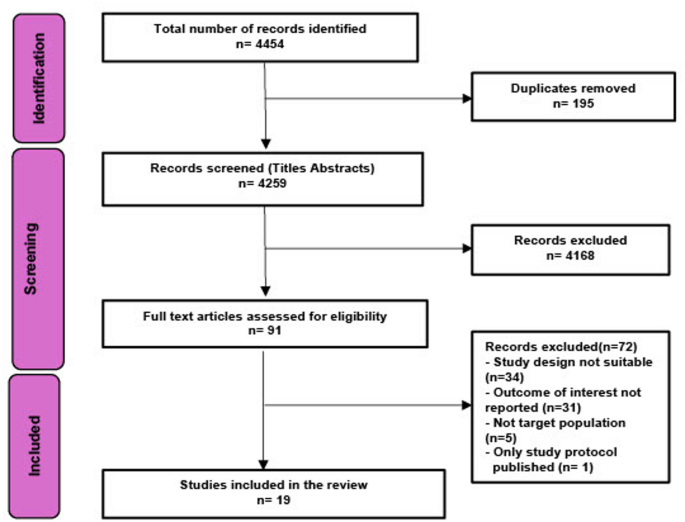
We searched MEDLINE (via OVID), PsycINFO (Via OVID), GLOBAL HEALTH (via Ovid), CINAHL (Via EBSCO) and ECONLIT (Via EBSCO) in English for articles related to poverty and mental health. We ran the search from January 1990 until February 2025 to align with the initiation and scaling of global poverty-alleviation programmes, including emergence of cash transfers. Databases were searched using database specific keywords and subject headings (See Supplementary Fig. 1). Additionally, lateral search techniques were used including: scanning reference lists (including from identified relevant reviews), searching keywords on Google Scholar and expanding the search via the ‘cited by’ option in PubMed. Corresponding authors of included studies were contacted for further recommendation. This review was registered with OSF55 and methods are reported in line with PRISMA guidelines (Fig. 1). No protocol was prepared. Two co-authors (SS, SEL) independently screened titles and abstracts, followed by full-text review. To ensure reliability, 10% of studies were randomly selected for double screening. Discrepancies were resolved through discussion, and inclusion/exclusion criteria were refined iteratively. All included studies were re-screened against final eligibility criteria. SS then completed the remaining screening independently. Five reviewers then recorded study characteristics on a shared spreadsheet using a pre-piloted data extraction form. To ensure consistency, data from the first 10% of studies were extracted in pairs. The remaining studies were extracted individually.
Inclusion and exclusion criteria
Inclusion and exclusion criteria were specified in advance and refined following piloting. Given the limited prior evidence on combined mental health and poverty-reduction interventions, we purposively adopted a broad approach to inclusion.
(1) Study design. We included articles with experimental or quasi-experimental evaluation designs, including prospective and retrospective cohort studies, and randomised and non-randomised evaluations. We excluded reviews, editorials, commentaries, non-empirical papers, or those using only qualitative methods.
(2) Population: We considered individuals/households/communities living in poverty, defined broadly in line with the Multidimensional Poverty Index (MPI), encompassing deprivations in education, health and living standards56. Studies did not need to use the MPI for inclusion nor did we quantify MPI values. We included clinical and non-clinical populations aimed at mental health prevention, promotion or treatment. We included mental health and substance use-related conditions as defined by DSM-V.
(3) Type of intervention. Studies had to include both a poverty-reduction and psychological/psychosocial component. We included poverty-reduction components which aimed to improve material circumstances or provide resources and services to enhance economic stability. These included cash or asset transfers, in-kind benefits (e.g., food, housing) or services (e.g., financial coaching, case management).
For psychological/psychosocial components, we included those with a stated aim around mental health treatment, prevention or promotion and that articulated mental health mechanisms or outcomes in their theory of change or aims. We included any modality, i.e., psychological, psychosocial and pharmacological modalities. We excluded: (i) Interventions only addressing physical health; (ii) Psychological interventions without an poverty-reduction component; (iii) Poverty-reduction interventions without a psychological component; (iv) Financial incentives to quit smoking/alcohol/attend therapy in populations other than those living in poverty; (v) Reimbursements for study participation or for travel to an evaluation; (vi) studies recruiting individuals based on receiving government benefits without a specific aim to assess its effect on mental health or socioeconomic outcomes.
(4) Comparison groups: We included studies that compared combined poverty-reduction and psychological interventions to: poverty-reduction interventions alone; psychological interventions alone, or standard care, usual services or no intervention.
(5) Outcomes. Our review included studies that reported at least one assessment of mental health or socioeconomic-related outcomes; studies were not required to report both for inclusion. We included a broad range of mental health outcomes including symptoms of common and severe mental disorders in alignment with the DSM-V as well as psychological distress and suicidality, as reported by participants, clinicians or other informants. We also considered indicators of positive mental health and wellbeing. Outcomes could be assessed using either categorical or continuous scales. In relation to socioeconomic outcomes, we considered any indicators of the material and social conditions of study participants. This includes, for example, education, employment, earnings, consumption, wealth, occupation, social class or social mobility.
Quality assessment
Six quality criteria were used and assessed at the time of data extraction. Criteria used were adapted from the Evidence for Policy and Practice Information and Co-ordinating Centre. These criteria are: (1) aims clearly stated, (2) design appropriate to the stated objectives, (3) justification given for sample size, (4) evidence provided of reliability or validity of measures used, (5) statistics were accurately reported and (6) sample selection was relatively unbiased.
Data extraction and synthesis
Data were extracted using a standardised, pre-piloted form. Missing data were requested from study authors. Detailed information was extracted on study design, participant characteristics, study context, intervention details and components, control/comparison conditions, timing of follow-ups, outcomes and any potential mediators and moderators assessed. We extracted means and standard deviations of continuous outcomes to calculate Hedges’ g. Where studies reported odds ratios, regression coefficients or other estimates, values were converted to Hedge’s g using the Campbell Collaboration effect size calculator57.
Analysis
We reported the outcome measure, baseline and follow-up summary statistics, standardised effect size estimate and 95% confidence interval for each relevant outcome (mental health problems and substance use, positive mental health and wellbeing outcomes and socioeconomic outcomes). We synthesised outcomes by outcome type, follow-up duration and comparator. We categorised results into three broad outcome categories; (1) mental health and substance use outcomes, 2) positive mental health and wellbeing outcomes and 3) socioeconomic outcomes. Outcome types were further divided into subcategories such as adult depression and anxiety, child mental health, and adult substance use within the mental health and substance use category, or economic performance and food security within the socioeconomic outcome category. Results were further divided by follow-up duration: short-term (less than three months), medium-term (three months to one year), and long-term (over one year), and comparator (combined versus psychosocial intervention only, combined versus poverty-reduction intervention only, or combined versus control). In cases where all participants were enrolled in a government benefits program as part of their eligibility criteria, any psychological or additional economic intervention was considered an added component rather than a standalone poverty-reduction intervention.
Past meta-analyses of poverty-reduction interventions have taken a variety of approaches when handling different follow-up periods, from simply choosing the longest follow-up and meta-analysing studies with a wide range of follow-up periods5 or including subsequent follow-ups as an individual study in the meta-analysis7. Given the high degree of clinical and methodological heterogeneity in this review, we did not conduct a meta-analysis with a single pooled summary effect. We instead calculated pooled effect sizes within relatively comparable subgroups to visually display the distribution of effects. Studies without sufficient data to calculate Hedge’s g values were excluded from the quantitative synthesis but included in the narrative synthesis. A summary table of intervention effect directions by outcome domain, comparator, and time point was created to visually display all included study results.
We used forest plots to provide a quantitative summary of effect sizes and displayed effect estimates by outcome. Pooled effect sizes were conducted for each outcome domain, stratified by outcome subcategory (e.g. adult depression and anxiety), follow-up duration, and comparator. We used bias-corrected Hedge’s g to adjust for small sample size bias. When multiple outcomes or follow-up times were reported within the same subgroup, we selected a single estimate using the following criteria: the longest follow-up, the most comprehensive outcome (e.g., total rather than subscale scores), or the median effect size (e.g., when both the Patient Health Questionnaire-9 (PHQ-9) and the Generalized Anxiety Disorder-7 (GAD-7) were reported).
link